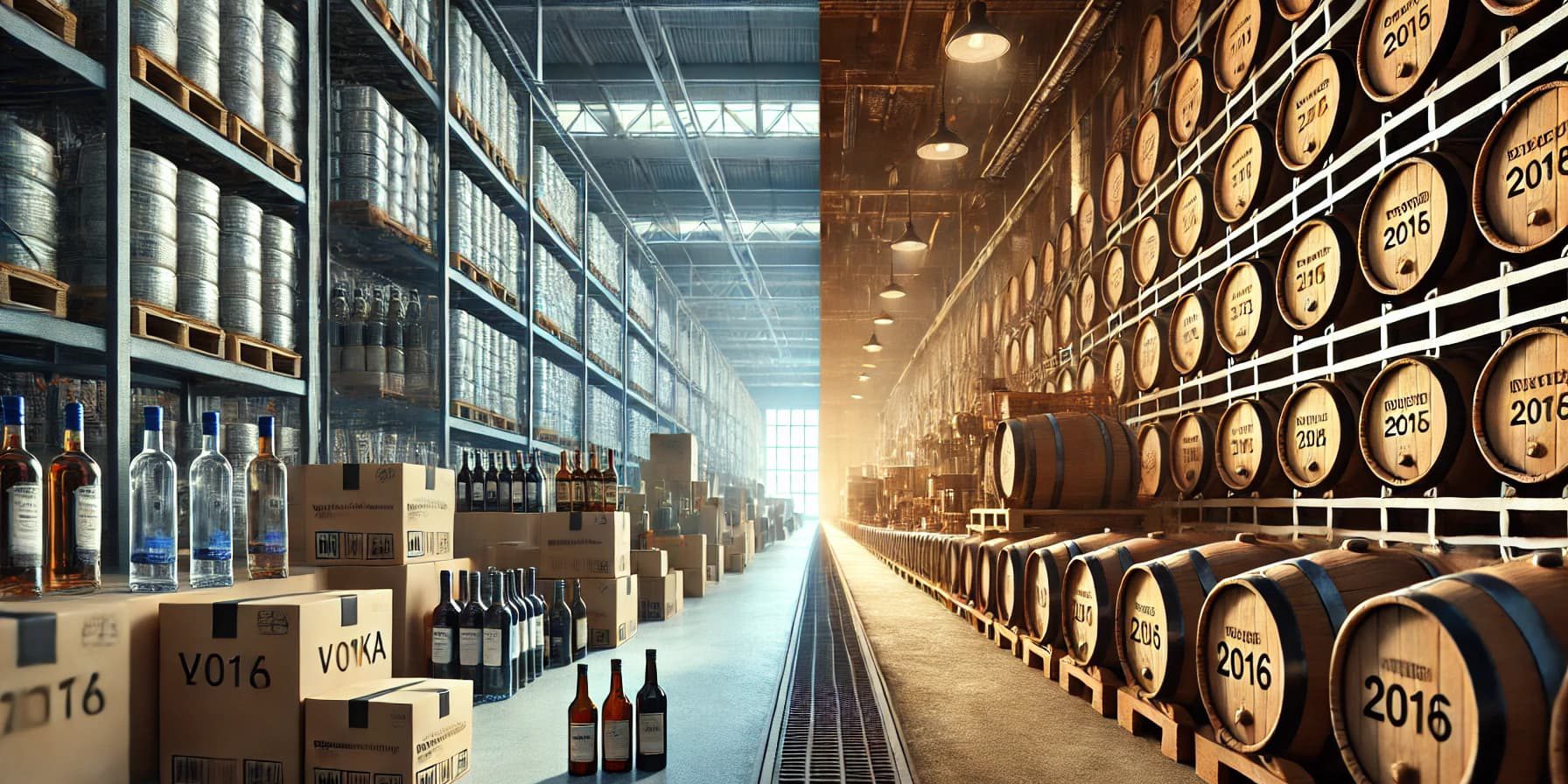
The story of early-release products versus aged products
Barrel rooms are where flavour develops, where patience is rewarded, and where future premium products quietly mature. For many producers, barrels represent craftsmanship, discipline, and long-term brand value.
But behind the romance sits a harder question that few producers regularly ask:
Is your barrel room actually creating profit — or quietly consuming it?
But this article isn’t really about barrels. It’s a story about stock turnover, use of capital, and cash flow – and how long-term inventory can either build a business or quietly strain it.
The romantic asset vs the financial reality
Whether you’re aging whisky, rum, brandy, or red wine, the principle is the same: the longer a product sits, the longer your capital is locked away.
From the outside, barrels look like stored value. Inside a business, they are something else entirely: cash locked away for years, slowly shrinking through evaporation, incurring storage, insurance, compliance, and opportunity costs along the way.
A Sauvignon Blanc might turn over in months. A gin or vodka batch can move even faster. A single malt whisky or barrel-aged rum may not generate revenue for years, sometimes decades. Until then, it ties up working capital and carries risk — not just production risk, but market risk. The product you release in three, five, or ten years is being made for a customer and a price point that may no longer exist.
Two strategies, one tension: early release vs long-term aging
Most producers operate across two very different product strategies, whether intentionally or not.
Early-release products prioritise speed and cash flow. They move quickly from production to sale, generate predictable revenue, and often fund day-to-day operations. These products may carry lower margins, but they keep the business liquid and flexible.
Short-cycle products:
Spirits: vodka, gin, liqueurs
Wine: Sauvignon Blanc, Pinot Gris, early-release reds
Beer: core range, seasonal releases
Aged products, on the other hand, promise higher margins, stronger brand positioning, and premium pricing. They build long-term value — but only if everything goes right over time.
Long-cycle products:
Spirits: aged whisky, rum, brandy
Wine: barrel-aged reds
Both strategies are valid. The problem arises when the balance between them isn’t actively measured or managed.
The hidden cost of long-term inventory
Long-cycle products carry costs that compound quietly over time.
Losses from evaporation compounds year after year. Small percentage losses become material when spread across hundreds of barrels and long aging cycles. Add to that barrel maintenance, replacement, insurance, storage space, compliance requirements, and labour — and the cost of aging grows quietly but relentlessly.
There’s also the cost that rarely appears in production records: opportunity cost. Capital tied up in barrels is capital that can’t be used for new equipment, marketing, staff, or growth opportunities.
Without visibility into these costs over time, aging can feel profitable while quietly eroding margin.
When time stops adding value
Aging is often treated as a guaranteed value multiplier. In reality, value peaks — and then plateaus or even declines.
Markets change faster than aging cycles. Barrels can sit past their optimal release window because demand forecasts change, release plans drift, or production teams lack visibility into which stock should move first. Inconsistent yields across barrel types further complicate planning, while market trends evolve faster than aging cycles.
Time alone doesn’t create value. Decisions do.
When those decisions rely on instinct rather than data, aging programs become vulnerable to underperformance.
Early release is not “lower quality” — it’s a financial lever
There’s still a lingering stigma around early-release products, particularly in spirits. But increasingly, high-performing producers see them for what they are: a strategic financial tool.
Early-release products stabilise cash flow, reduce reliance on debt, and fund long-term aging programs. They provide flexibility in uncertain markets and allow producers to respond to demand shifts without waiting years for stock to mature.
The strongest portfolios aren’t built on aging alone. They’re built on deliberate balance.
What high-performing producers track
Producers who manage this balance well treat inventory as a financial asset, not just a production output.
They track:
- Stock turnover by product type
- Capital tied up in long-term inventory
- Yield and loss over time
- Projected margins at different release points
- Cash flow exposure across aging programs
This visibility allows them to decide what to release, when, and why – rather than relying on tradition or instinct.
Turning aging stock into a strategic advantage
The shift isn’t about aging less. It’s about aging smarter.
That means treating barrels not just as vessels for flavour, but as long-term financial commitments. It means aligning production, finance, and sales planning, and making release timing a conscious business decision rather than a tradition.
As operations scale, spreadsheets and informal records struggle to keep up. This is where modern production systems play a critical role, providing barrel-level visibility, long-term forecasting, and audit-ready records without adding complexity to the production floor.
Platforms like Vinsight are designed to support exactly this kind of decision-making — helping producers see what’s happening inside their barrel rooms before profit quietly disappears.
So, what story is your stock telling?
Every producer carries a mix of short-term and long-term bets. The question is whether those bets are deliberate – or inherited.
Do you know how much capital is tied up in your aging programs? Which products are funding the future, and which are quietly stalling it?
And if market conditions changed tomorrow, could you respond with confidence?
Because in the end, this isn’t just a story about barrels. It’s a story about how well your business turns time into value.